
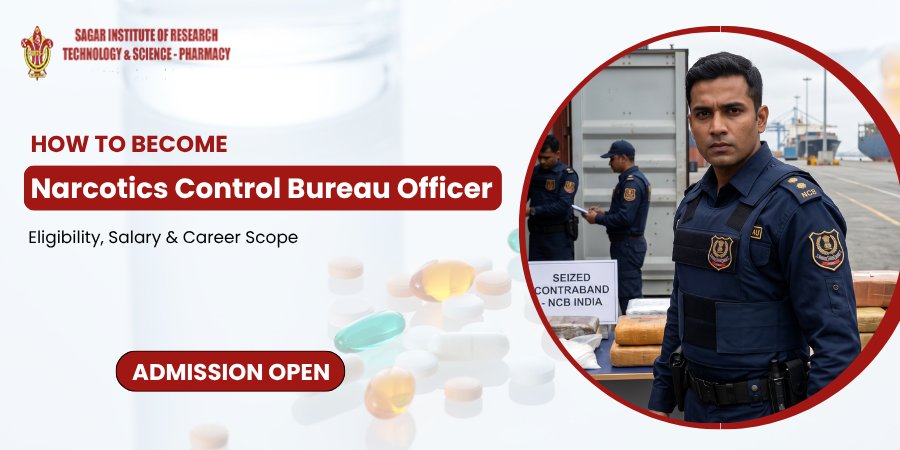
The Narcotics Control Bureau (NCB) is India’s central law enforcement agency responsible for combating drug trafficking and the illegal use of narcotic substances. Established to enforce drug laws and coordinate actions against drug abuse, NCB plays a critical role in maintaining public health and national security.
In today’s world, where drug abuse in India, illegal pharmaceutical usage, and synthetic drug cases are increasing rapidly, the role of NCB has become more important than ever.
For students pursuing B.Pharm, D.Pharm, or M.Pharm, this career path offers a unique opportunity to apply scientific knowledge in government jobs after pharmacy, drug control careers, and law enforcement roles.
Why NCB is a Great Career for Pharmacy Students
Pharmacy is not just about dispensing medicines—it is deeply connected with drug composition, chemical structure, pharmacology, toxicology, and drug regulation.
This makes pharmacy students ideal candidates for careers like:
• NCB officer jobs in India
• Drug inspector careers
• Pharmacovigilance and drug safety roles
Key Advantages for Pharmacy Students
• Strong understanding of pharmacology and toxicology
• Knowledge of controlled drugs and narcotic substances
• Ability to identify synthetic drugs and illegal substances
• Familiarity with drug testing and forensic analysis
In NCB operations, officers deal with:
• Seized drug samples
• Chemical composition analysis
• Identification of banned drugs
A pharmacy background gives you a scientific edge in NCB recruitment.
Educational Qualification & Courses
To apply for NCB officer eligibility, you must have at least a bachelor’s degree.
Relevant Pharmacy Courses
• D.Pharm (Diploma in Pharmacy) – 2 years
• B.Pharm (Bachelor of Pharmacy) – 4 years
• M.Pharm (Master of Pharmacy) – 2 years
• PhD in Pharmacy
Important Subjects to Focus On
• Pharmacology
• Pharmaceutical Chemistry
• Medicinal Chemistry
• Toxicology
• Pharmacognosy
These subjects are directly linked with drug analysis jobs and narcotics identification.
About SIRTS Pharmacy College
If you are looking for a strong academic foundation, institutions like Sagar Institute of Research, Technology & Science-Pharmacy (SIRTS-P)
play an important role in shaping your career.
Why Choose SIRTS Pharmacy?
• Offers D.Pharm and B.Pharm programs
• Advanced laboratories for pharmaceutical chemistry & drug testing
• Focus on research, innovation, and industry exposure
• Experienced faculty guiding students for competitive exams like UPSC & SSC
• Strong placement and career support
Studying at a reputed institute helps in building a strong base for pharmacy government jobs preparation.
How to Become an NCB Officer (Step-by-Step Guide)
1. Through UPSC Civil Services Examination
Clear the UPSC Civil Services Examination and join:
• IPS (Indian Police Service)
• IRS (Customs & Indirect Taxes)
Later, you can be deputed to NCB.
✔ Best for: High-ranking government jobs
2. Through SSC CGL Examination
Appear for SSC Combined Graduate Level Examination and join:
• Customs Department
• Central Excise
• Intelligence agencies
✔ Best for: quick entry government jobs after graduation
3. Through State Police Services
• Join as Sub-Inspector or Inspector
• Gain experience
• Move to NCB through deputation
✔ Best for: field job lovers & enforcement roles
Educational Qualification
• Bachelor’s degree (B.Pharm preferred)
Age Limit
• 21 to 32 years
Physical Fitness
• Required for IPS and field roles
Skills Required to Become an NCB Officer
Technical Skills
• Drug identification
• Chemical analysis
• Knowledge of drug laws
Understanding the NDPS Act 1985 is essential
Soft Skills
• Analytical thinking
• Decision-making
• Communication skills
Roles and Responsibilities of an NCB Officer
1. Investigation
• Drug trafficking network tracking
• Conducting raids
2. Scientific Analysis
• Drug composition testing
• Forensic lab coordination
3. Coordination
• Work with international agencies
• Monitor illegal pharma activities
Salary Structure of an NCB Officer
Estimated Salary
• Entry-Level: ₹40,000 – ₹60,000/month
• Mid-Level: ₹60,000 – ₹1,00,000/month
• Senior Level: ₹1,00,000 – ₹2,00,000+/month
Additional Benefits
• Government housing
• Medical facilities
• Travel allowance
• Pension
Career Growth & Scope
Career Path
• Intelligence Officer
• Superintendent
• Zonal Director
• Director General
Future Opportunities
• International agencies
• Forensic science careers
• Drug policy making
• Research roles
Career Options for Pharmacy Students
Even if you don’t enter NCB, top searched options include:
• Drug Inspector
• Pharmacist
• Clinical Research Associate
• Pharmaceutical Industry Jobs
• Government jobs after B.Pharm
Ensures career stability and multiple opportunities
Preparation Tips for Pharmacy Students
Academic Preparation
• Focus on pharmacology
• Study drug laws
Competitive Exams
• Prepare for UPSC / SSC
• Improve GK & current affairs
Practical Exposure
• Lab work
• Internships
• Research
Fitness
• Maintain physical health
Common Challenges
• High-risk operations
• Stressful situations
• Long working hours
But these build strong leadership and discipline
Why Choose NCB as a Career?
• Serve the nation
• High respect
• Challenging work
• Fight against drug abuse
One of the best government jobs for pharmacy students
Frequently Asked Questions (FAQs)
1. What is the NCB and what does an NCB officer do?
The Narcotics Control Bureau (NCB) is a central government agency that fights drug trafficking and illegal drug use in India.
NCB officers investigate cases, conduct raids, and analyze drug samples to control narcotics crimes.
2. Can pharmacy students become NCB officers?
Yes, pharmacy students are highly suitable for NCB roles because they understand drug composition, toxicology, and chemical analysis, which are essential in narcotics investigations.
3. What is the eligibility to become an NCB officer?
To become an NCB officer, you generally need:
• A Bachelor’s degree (B.Pharm or any graduate degree)
• Age between 21–32 years
• Good physical fitness (for field roles)
4. Which exams are required to join NCB?
You can join NCB through:
• UPSC Civil Services Exam (for IPS/IRS officers)
• SSC CGL Exam
• State Police Services
These are the main entry routes into the NCB.
5. Is B.Pharm necessary to become an NCB officer?
No, B.Pharm is not mandatory, but it is highly beneficial.
A pharmacy background gives you an advantage in drug identification and forensic analysis.
6. What skills are required to become an NCB officer?
Important skills include:
• Knowledge of drug laws (like NDPS Act)
• Analytical thinking
• Chemical and drug identification skills
• Communication and decision-making abilities
7. What is the salary of an NCB officer?
The approximate salary is:
• Entry level: ₹40,000 – ₹60,000/month
• Mid level: ₹60,000 – ₹1,00,000/month
• Senior level: ₹1,00,000+ per month
Along with government benefits like housing and medical facilities.
8. What are the roles and responsibilities of an NCB officer?
NCB officers:
• Investigate drug trafficking networks
• Conduct raids and operations
• Analyze seized drug samples
• Coordinate with national and international agencies
9. What are the best courses for becoming an NCB officer?
Relevant pharmacy courses include:
• D.Pharm
• B.Pharm
• M.Pharm
• PhD in Pharmacy
These courses build a strong foundation in drug-related sciences.
10. What is the career growth in NCB?
Career progression includes:
• Intelligence Officer
• Superintendent
• Zonal Director
• Director General
There are also opportunities in international agencies and policy-making roles.
Conclusion
Becoming an NCB officer is a prestigious and impactful career, especially for pharmacy students. It blends science, law enforcement, and national service into one powerful profession.
With the right preparation, strong academic background from institutes like SIRTS Pharmacy, and success in competitive exams, you can achieve your goal.